


Next-generation hydrogen fuel
H₂Unity is a stealth mode innovation company, developing a next-generation hydrogen fuel platform. With a proven innovation team, we are dedicated to solving the hard problems, starting with cost and scalability. Low emissions is not enough. The future of energy must also be cost-competitive and globally-scalable.
Hydrogen has tremendous potential as a transportation fuel. Today’s commercial technologies for hydrogen storage and transport still rely on cryogenic cooling (- 423 °F) and high pressure (up to 5 tons per square inch), an approach that is essentially unchanged after more than 100 years. As a result, today’s hydrogen storage and fuel delivery is excessively expensive, inefficient and unsafe for broad adoption.
H₂Unity is advancing the next-generation of fuel technology to enable large-scale hydrogen use, as a cost-competitive replacement for diesel, gasoline and jet-fuel.
Why?
The global market for liquid fossil fuels generates over US$ 3 trillion in annual sales. This market only continues to grow. Petroleum use has increased by over 23% during the past 20 years.
Even with the notable increased use of electric vehicles in some passenger markets, liquid fossil fuels today still contribute over 28% of global emissions.
Despite announcements to the contrary , the demise of fossil fuels may have been greatly exaggerated. According to the US EIA, transportation fuels in the US during 2025 were:
over 94% made directly from fossil fuels;
over 99% have significant fossil fuel inputs; and
about 0.2% is electrified, mostly charging from fossil fuel energy.
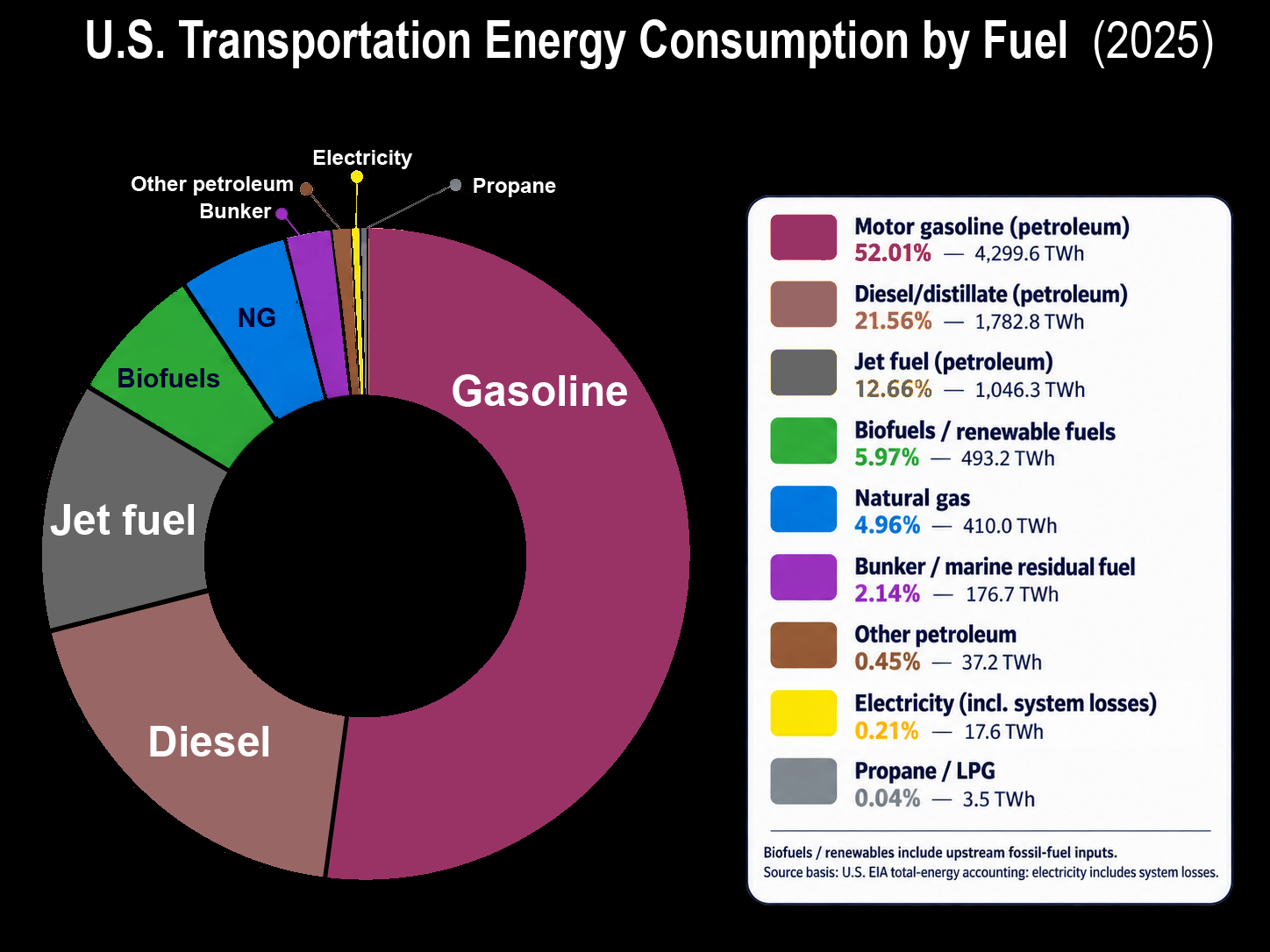
Does this look like an energy transition? We need a better solution that is actually cleaner and low-cost.
Market entry: heavy duty and long-haul transportation
Passenger electric vehicles get a lot of attention, and even after over a trillion dollars in global investments over the past decade, EVs make up only about 5% of total passenger cars on the road globally.
When it comes to zero-emissions for heavy and long-haul vehicles, like large trucks, ships and aircraft, there are currently no clean fuel alternatives. EV battery technology is not well suited for heavy and long-haul vehicles. This is the market entry point for H₂Unity, providing a clean fuel technology platform to an underserved global market that is presently spending billions of dollars seeking a pathway towards a zero-emissions future.

Growth in Hydrogen Supply
“Green hydrogen” is produced using renewable energy sources, like solar and wind. As renewable energy continues to expand, hydrogen production expands. Other sources of hydrogen production also include “Purple hydrogen”, generated by fission reactor power, and “Orange hydrogen”, which harnesses geothermal energy to split water inside hot mineral formations.

Recent discoveries in geophysics indicate the presence of vast reserves of sub-surface hydrogen, “Geologic hydrogen”, in geologic structures that have largely been ignored by traditional energy companies. In January 2025, the US Geological Survey launched a dedicated USGS geologic hydrogen page.
The conventional hydrogen bottleneck
The high costs of traditional hydrogen storage and transport technologies arise from hydrogen’s properties:
Low density as a gas, at atmospheric pressure and ambient temperature.
H₂ gas causes metal embrittlement in most alloys of iron, aluminum and titanium.
Tendency for pressurized H₂ gas to leak from most pipes and containers.
Safety systems required to address H₂ gas’ broad flammability range.
Energy penalties for compression and cryo-cooling of H₂.

Despite growing supplies of hydrogen, the high cost of current commercial hydrogen storage and transportation are the bottleneck to market growth.
Breakthrough Innovation
H₂Unity is commercializing breakthrough technology in hydrogen storage, that is proprietary and patented, developed by a world leading researchers.
In addition, we are establishing collaborative technology partnerships to unify the hydrogen market into a cost-competitive energy ecosystem, that connects:
Suppliers
Storage
Logistics
Point-of-use
For hydrogen to become a cost-competitive replacement for conventional transportation fuels and an energy storage method, the technology must have the following advantages:
High energy density at ambient temperature
No compression
Zero self-discharge
Long-term stability
H₂Unity is targeting a cost-parity replacement solution for current transportation fuels (diesel, gasoline and jet fuel). In 2025, independent testing confirmed that the technology works.